
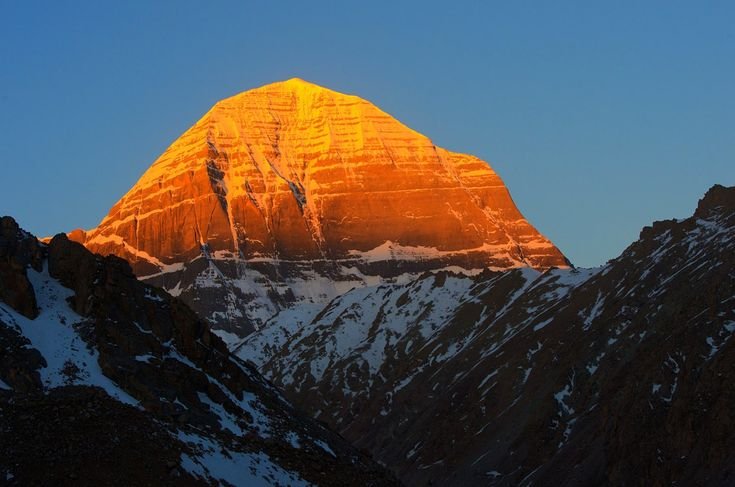

Kailash Overland Yatra by Bus from Kathmandu
Kailash Mansarovar Yatra is regarded as one of the most sacred pilgrimages for adherents of Hinduism, Jainism, and Buddhism, while simultaneously being recognized as one of the most challenging spiritual journeys in Asia. Nevertheless, the overland tours to Kailash Mansarovar have made the arduous terrain more manageable and accessible, thanks to the modern road infrastructure and transportation systems in Tibet. This 14-day expedition, imbued with a sense of adventure, commences in Kathmandu and involves a rugged yet picturesque drive to Keyrung, crossing the Nepalese border at Rasuwagadi. The well-paved roads of Tibet leading to Lake Mansarovar and Mount Kailash provide breathtaking views of snow-capped peaks and expansive Tibetan plains.
Details
Day 01 : Arrival in Kathmandu
Commence your journey today upon your arrival at Kathmandu International Airport. A representative from Max Holidays will be present to welcome you outside the airport and will assist you with your transfer to your hotel in Kathmandu. The remainder of the day is at your leisure. Dinner and overnight accommodation will be provided at the hotel.
Nepal Tourist Visa : Indian passport holders are not required to obtain a visa for travel to Nepal. However, when flying to Tribhuvan International Airport in Kathmandu from any international airport in India, Indian citizens must present either a valid Indian passport or a Voter Identity Card (Indian Electoral Card). It is important to note that Aadhaar Cards and Driving Licenses are not accepted as valid documents for boarding flights to Kathmandu from Indian airports. Conversely, non-Indian passport holders can obtain a Nepal visa upon arrival at Kathmandu International Airport. Additionally, they have the option to apply for this entry visa online to expedite their process at the airport.
Tibet Group Travel Visa : To acquire a Chinese visa, Indian passport holders must submit their original passport at the Chinese Embassy in New Delhi through a tour company that has secured the necessary Tibet entry permit and invitations, regardless of their country of residence or geographical location. The processing time for visa decisions at the Chinese Embassy in Delhi is a minimum of 4 to 5 working days. Conversely, travelers holding non-Indian passports, including NRIs with non-Indian passports, OCI card holders, and Green Card holders, are required to undergo biometrics at the China Visa Center in Kathmandu for their visa application submission. They must provide their original passport along with the visa application documents and recent colored photographs that meet the specified size and format to the Chinese Embassy in Kathmandu. The decision-making process for these visas typically takes a minimum of 3 to 4 working days.
Day 02 : Kathmandu sightseeing
At approximately 8:00 AM, the visit to the temple will commence. Our aim is to arrive at Pashupatinath Temple by 9:00 AM in order to participate in the aarti ceremony at the main temple. We will also explore various smaller and larger temples within the complex. Following our time at Pashupatinath Temple, we will proceed to the ‘Sleeping Vishnu’ Temple (Jal Narayan Temple) and the Guheshwari Mata Temple. After our temple visits, we will return to the hotel to prepare for the upcoming journey to the Nepal-China border. Should you wish to purchase items for your trip, a visit to the renowned Thamel market is recommended, where you can find nearly every item related to trekking and adventure activities. In the evening, a brief program will be held, which will include an introduction of all group members. We will conclude the day with an overnight stay and dinner at the hotel.
Day 03 : Kathmandu to Syabrubesi
Following breakfast, the group will embark on a bus journey to Syabru Besi (2380m). Although the distance to Syabru Besi is relatively short, poor road conditions and traffic can render the trip quite exhausting, uncomfortable, and time-consuming. The estimated travel time is approximately 7 to 8 hours to traverse the 148 kilometers. Upon arrival in Syabru Besi, accommodations will be arranged in a lodge, where dinner and overnight stay will take place.
Day 04 : Shyabrubesi to Kyirong
Today, the group will be entering China, and there may be time-consuming formalities at the border immigration. The guide may suggest an early wake-up call and breakfast to ensure we arrive at the border promptly, thereby avoiding the rush of pilgrims at the immigration counter. We will begin our brief drive to the Nepalese border at Rasuwagadhi (1850m), located approximately 15 kilometers (about 1 hour) from Syabru Besi. After completing the necessary immigration procedures, the group will cross the border on foot to enter the Chinese side. Pilgrims will then be transferred to a Chinese bus for the subsequent 110-kilometer journey to Kyirong (2700m). The travel will be conducted in robust and comfortable vehicles operated by Tibetan drivers. The accompanying Nepalese Sherpas will board the coaches after loading your luggage, essential food supplies, and water, continuing the journey into the Tibetan/Chinese region towards the town of Kyirong (also referred to as Gyirong, Kerung, or Keyrong). Upon arrival, guests will check into their guesthouse and have the opportunity to rest. Our kitchen staff will provide hot tea or coffee along with light snacks shortly after setting up. Following this, you may explore the hotel surroundings or take a walk in the nearby markets. Dinner, prepared by our Nepalese chef, will be served between 7 and 8 PM (local time). Overnight accommodations will be in a dormitory-style guesthouse in Keyrong.
Important Remark : When traveling at high altitudes, it is common to experience certain health-related discomforts. Consequently, it is recommended for all travelers to increase their fluid intake. This can include various forms of liquids such as soup, juice, tea, coffee, or hot water. Adequate hydration will assist in rehydrating the body and enhancing respiratory function.
Day 05 : Free day Kyirong for acclimatisation
This day is designated for acclimatization to the challenging climatic conditions of Tibet. Our tour manager will facilitate a brief hike in and around Keyrong to help your body adjust to the high altitude of Tibet. Additionally, you may spend the day engaging in Bhajan or Katha chanting at the guesthouse. (Please note that if circumstances allow, the guides may lead the group to Saga for an overnight stay.)
Day 06 : Kyirong to Saga / Zhongba
The delightful journey through the mountainous landscape and the plains of Tibet offers a stunning vista as we make our way from Keyrong to Saga. After crossing the Yarlung Zangpo (Brahmaputra River), we will take the northern route, leading us to the picturesque town of Saga, situated at an elevation of 4640 meters. Saga is a charming Tibetan town that features several decent hotels and guesthouses, along with a variety of local restaurants and a market, providing ample opportunities for leisure during the acclimatization process. Accommodations and meals will be arranged in Saga.
Note: Should circumstances and time allow, the guide may lead the group to Zhongba, also referred to as Dongba, for an overnight stay. This arrangement aims to reduce the driving duration required the next day to reach Lake Mansarovar. It is important to adhere to the guide’s instructions.
Day 07 : Saga to Lake Mansarovar
Today marks a significant milestone in your journey, as you will not only arrive at the sacred Lake Mansarovar but also witness your initial view of the revered Mount Kailash. The journey commences early, given the considerable distance to Lake Mansarovar and the multiple checkpoints along the route, which may render the trip both exhausting and time-consuming. It is anticipated that the drive will begin at 7:00 AM. Prior to reaching Mayumla Pass (4900m), we will pause at the checkpoint. Following this stop, we will proceed towards Lake Mansarovar, where you will have the opportunity to experience the first darshan of Mount Kailash. Although the drive is lengthy, the road conditions are favorable, and the surroundings are filled with picturesque landscapes. Upon arrival at Lake Mansarovar, you will check into a guesthouse, where dinner and overnight accommodations will be provided.
Night view of Lake Mansarovar : Travelers may consider visiting Lake Mansarovar at night to experience its beauty illuminated by moonlight. While it is entirely safe to visit the lake during nighttime, it is recommended to travel in a group and, if feasible, to enlist the assistance of a Nepalese Sherpa for any necessary support. It is essential to dress warmly or bring a blanket, as the outdoor temperatures can be quite low. Additionally, do not forget to bring a flashlight and a whistle.
Day 08 : Lake Mansarovar to Darchen
Commence your day with an early morning visit to Mansarovar Lake for a sacred bath, during which you may perform puja, hawan, and other rituals in accordance with your personal customs. The lake presents a breathtaking view in the morning, enhanced by the majestic sight of Mount Kailash, which adds to the overall splendor. Although the lake’s water is notably cold, devotees are filled with spirituality and devotion, making them reluctant to forgo this holy experience. It is important to be aware that recent regulations from the Tibetan government have prohibited bathing in the lake, classifying it as a punishable offense. Therefore, please refrain from entering the lake; instead, request our sherpas to provide you with water in a bucket for your ritual. Following your prayers and the sacred bath, the group will prepare to travel to Darchen, passing through Rakshasa Taal and Chiu Gompa while completing 70% of the parikrama around the holy lake. The remaining portion of the parikrama will be undertaken upon returning from Darchen after the kora of Mount Kailash.
Upon arrival in Darchen, check into your hotel and take the remainder of the day to relax and prepare for the upcoming kora of Mount Kailash. Dinner and overnight accommodations will be provided at the hotel.
Day 09 : 1st Day kora/parikrama of Mt. Kailash, 13kms trek to Dirapuk
Today, we rise early and, after a light breakfast, make our way to Tarboche. It is essential to fill your water bottle prior to departing for the trek. All pilgrims have the chance to visit Yama Dwar before the kora begins. Tarboche serves as the location, situated towards the southern face of Mount Kailash, where one can hire a horse or pony for the trek. The pricing and availability of horses, ponies, and porters are regulated by the local Union and Kailash yatra trip operators, and our team will not have any influence over these arrangements. From Tarboche, we will proceed to Yama Dwar, which is regarded as the starting point of the Kailash kora. The trek from Yama Dwar to Dirapuk spans 13 kilometers and will be undertaken at a slow and steady pace. Although the trek to Dirapuk Gompa is relatively easy, the high altitude may cause a shortage of oxygen, making the journey somewhat challenging as you may experience shortness of breath. We will pause midway at a location with small shops and a tea stall before continuing on to Dirapuk. Upon arrival at Dirapuk, pilgrims will be greeted by the magnificent sight of Mount Kailash towering to the right of the trail. Take the opportunity to capture some stunning photographs before proceeding to your guesthouse near Dirapuk Monastery. The night will be extremely cold, with temperatures dropping below zero degrees, so we will enjoy a quick and light dinner, such as khichdi or soup, before resting for the night.
Important remark : Group members wishing to modify their schedule and opting out of the trekking activity may choose to visit Yam Dwar and return to the hotel in Taklakot. They are encouraged to request the guide to facilitate their extended hotel accommodation in Darchen, with the understanding that they will cover the costs of their lodging and any other supplementary expenses directly.
Day 10 : 2nd Day parikrama, 19kms trek to Zuthulpukh via Gauri Kund
Rise early in the morning, just before dawn, to experience the breathtaking sight of the first rays of sunlight illuminating Mt. Kailash, creating the stunning phenomenon known as the ‘Golden Kailash.’ After a light breakfast, fill your flask with hot water, pack your snacks for lunch, and prepare to embark on the trek to Zuthulphuk. This day is regarded as the most challenging of the entire journey, as the trek ascends steeply to the Dolma-La pass (5630 m) before descending sharply to Gauri Kunda. Near the Dolma La pass, you will encounter vibrant prayer flags and personal belongings left by pilgrims. This site is referred to as Shiva Tsal (Shiva Sthal). It is believed that those undertaking the parikrama should leave behind a token, such as a piece of clothing, jewelry, a drop of blood, or a lock of hair, symbolizing the relinquishment of worldly attachments and a desire to escape a life of suffering. The total distance to be covered today is approximately 19 kilometers to reach Zuthulpuk Gompa for an overnight stay.
Important remark : If you find that you do not wish to continue the trek from Dirapuk to Zuthulpuk and prefer to alter your itinerary to return to Darchen for an overnight stay, it is essential to notify the guide to facilitate the necessary arrangements. Please be advised that all extra costs incurred due to this change, including accommodation and meals in Darchen, will be the responsibility of the traveler(s) making the schedule adjustment.
Day 11 : 3rd Day 06kms trek to Darchen, Drive to Saga
This marks the final day of our trek on Mount Kailash. Following a light breakfast, we will resume our descent towards Darchen. The trek will be gradual, covering approximately 6 kilometers until we arrive at a designated point where vehicles will be awaiting our arrival. These vehicles will transport us to Darchen, where we will reunite with other members of our group. After a brief refreshment break, we will continue our journey to Saga, completing the remaining 30% of the Lake Manasarovar parikrama by vehicle. We will then enjoy some leisure time and stay at a guesthouse in Saga.
Day 12 : Saga to Kyirong
Following breakfast, we commence our journey to Keyrung. We traverse the bridge spanning the picturesque Brahmaputra River and proceed across the expansive Tibetan plains. This journey presents breathtaking views of the Himalayas, especially of Shishapangma and Pieko-Tso Lake. Navigating well-maintained roads and mountainous landscapes, we arrive in Keyrung for our overnight stay.
Day 13 : Kyirong to Kathmandu via Rasuwagadhi
Following breakfast, proceed towards the Keyrong border. Upon arrival, we will walk to the Nepalese immigration control at Rasuwagadi, where we will complete the necessary entry formalities for Nepal. Afterward, we will transfer to the vehicle waiting on the Nepalese side. The journey to Kathmandu will continue from there, which may take approximately 7 to 8 hours or longer by bus, contingent upon road and traffic conditions. Dinner and overnight accommodation will be provided at a hotel in Kathmandu.
Day 14 : Fly back to home from Kathmandu
Intime you will be transferred to Kathmandu Tribhuvan International airport to board your flight back to your hotel/next destination

 Contact Us